
Industries
GPS Fleet Tracking for Waste and Recycling Fleets: Proof of Service, Routes and Hydraulics
A refuse truck's day is a few hundred stops, a hydraulic system working harder than the engine, and a phone ringing about a missed pickup. Here's what telematics does for a waste and recycling fleet — service verification, route completion, PTO and idle data, and the camera footage that closes a complaint in minutes.
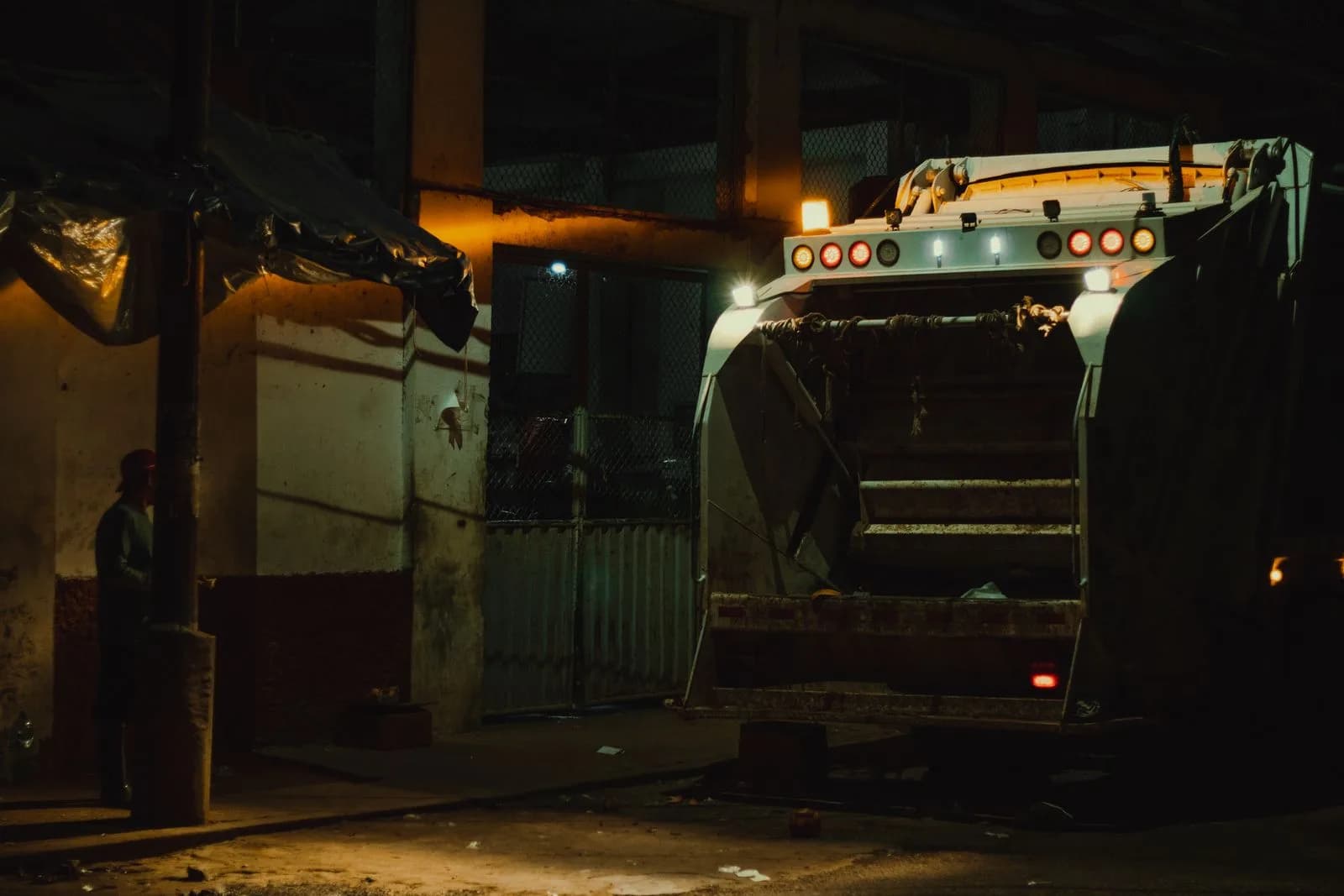
The Missed Pickup Problem
Every waste operation, municipal or private, runs on the same complaint: the truck did not come. Sometimes it did not; often it did, and the bin was not out, or was blocked, or was contaminated and left on purpose. Without a record, the dispatcher takes the resident's word and sends a truck back, which costs a second trip and teaches the route that complaints work. With telematics, the dispatcher pulls the truck's track for that street and sees the vehicle pass the address at 7:42, slow, and continue. With an arm or hopper sensor on the IOX port, the record shows whether the lift cycled there. With a camera, it shows the bin.
That is the first thing waste fleets buy tracking for, and it pays for itself in avoided go-backs and shorter phone calls before any of the rest is switched on.
Route Completion and Sequencing
A refuse route is a fixed sequence of hundreds of stops, and the questions are whether it was completed, in what order, and how long it took. The platform overlays the truck's actual track on the planned route, flags streets that were skipped, and gives a completion time per route that can be compared week over week and driver over driver. Fleets use it to balance routes — the driver finishing at one o'clock and the one finishing at four are usually a routing problem, not a driver problem — and to rebuild routes when a new development opens or a transfer station moves.
Geofences on the transfer station and landfill add turnaround times and trip counts, which is how a fleet finds out that a truck is making an extra run a day because it leaves the yard half-loaded.
Hydraulics, PTO and Idle
The engine on a refuse truck runs all day, but much of that is powering the hydraulics through the PTO rather than moving the truck. Telematics separates the two: a PTO-on-off reader on the IOX port records when the hydraulics are engaged, so the fleet can distinguish productive idling at the stop from a truck sitting with the pack cycling nothing. Engine-hour data drives maintenance intervals more accurately than mileage for a vehicle that covers thirty kilometres in an eight-hour shift, and fault-code reporting catches a hydraulic pressure or exhaust after-treatment problem before the truck is down on route.
Cameras Where the Risk Is
Refuse trucks back up constantly, work curbside beside pedestrians and cyclists, and are the vehicle most likely to be in a low-speed collision on a residential street. A road-facing and driver-facing AI dash cam records the approach to each incident; side and rear cameras cover the backing and the arm. The footage that clears a driver in a scraped-car claim is the same footage that shows a bin blocked by a parked car, and both come from the same install.
Frequently asked questions
How does GPS tracking prove a pickup was made?
The truck's track shows it passing the address at a time, an arm or hopper sensor shows the lift cycled, and a camera shows the bin. Together they settle a missed-pickup complaint without a second trip.
Can telematics track the hydraulics on a refuse truck?
Yes. A PTO on-off reader on the IOX port records when the hydraulics are engaged, separating productive idle at the stop from waste.
Does tracking help with route planning for waste collection?
Yes. Actual tracks overlaid on planned routes show skipped streets, completion times and imbalances between routes, which is what a rebuild is based on.
What cameras do waste fleets use?
A road- and driver-facing AI dash cam for the approach and the driver, plus side and rear cameras for backing and the arm. Multi-camera systems cover all of it from one recorder.
Does this work for a municipal fleet?
Yes. Public works fleets use the same platform, and a public tracking portal can show residents where the trucks are on collection day.
Related solutions & products
Get a free quote
What are you looking for?