
Industry
GPS Fleet Tracking for Charter, Motorcoach & Tours
GPS tracking and ELD compliance for charter and motorcoach operators: live coach location, hours of service in the driver app, IFTA mileage and trip records.
Updated September 21, 2026
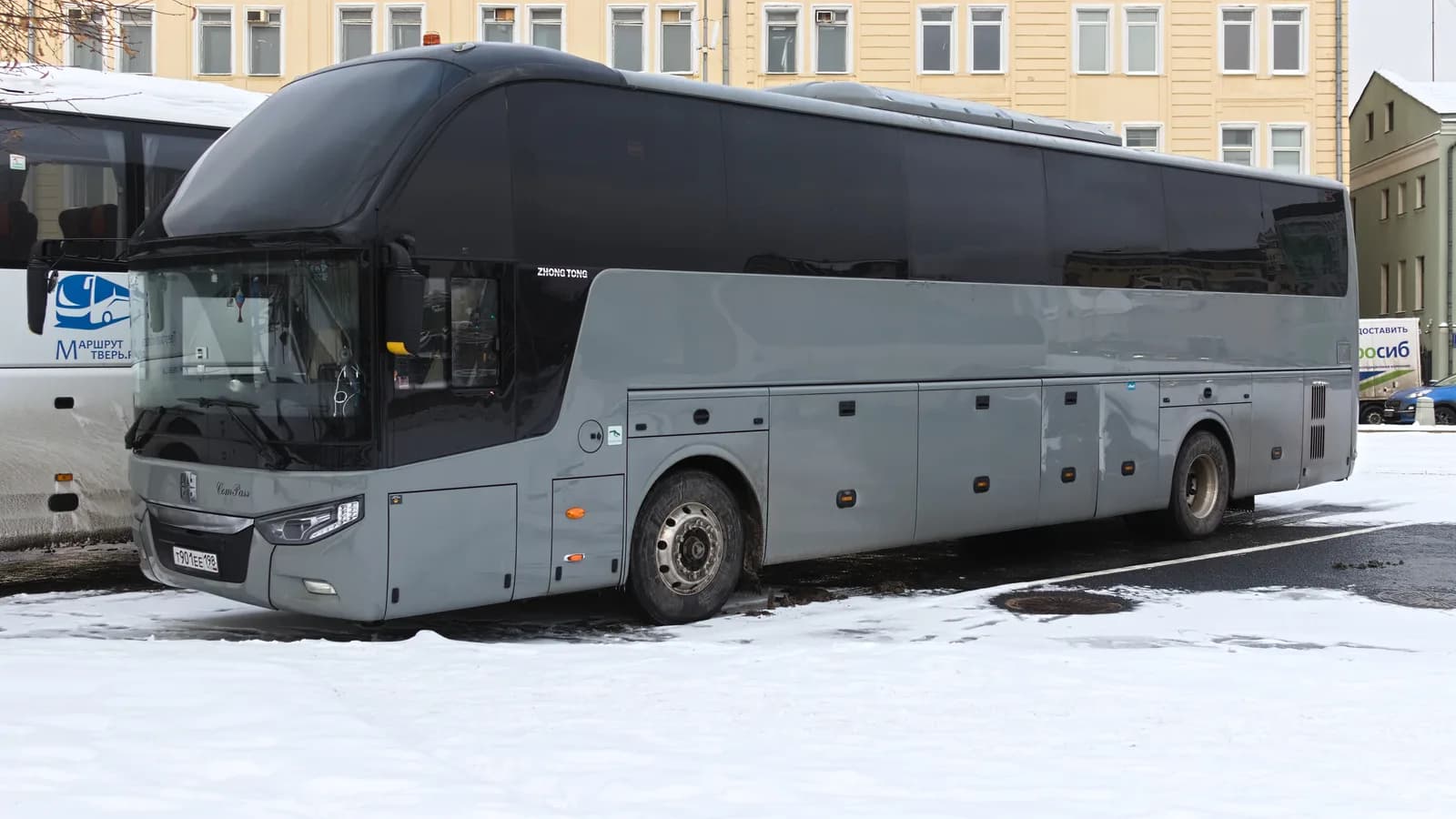
A charter operator sells a promise: the coach will be at the hotel at 7:30, the driver will be legal for the whole itinerary, and the group will get where it is going. GPS tracking from High Point GPS shows the office every coach on one live map, with the pickup it is heading to and the time it will arrive, and lets a tour coordinator answer a client's call without radioing the driver on the highway. The GPS tracking device records each trip in full, including the border crossing, the layover and the miles in each state and province, which is what the IFTA return and the driver's hours-of-service log both depend on. Drivers run their daily log and their pre-trip inspection in the driver app, and a coach that fails an inspection item is flagged to the shop before it leaves the yard. Driver ID ties every trip to the driver who ran it, including the relief driver who took over at the halfway point. When a client claims the coach arrived late or a tour guide reports rough driving, the trip replay and the driver score settle it. Engine-hours maintenance, fault codes and fuel-card reconciliation keep the coaches on the road and the fuel bill honest, and a customer-facing tracking link lets a school or a sports team watch their coach come in.
Common challenges
- Clients calling to ask where their coach is, while the driver is on the highway and should not be on the phone
- Hours-of-service logs and inspection sheets on paper across multi-day itineraries and two countries
- IFTA mileage by jurisdiction reconstructed from itineraries and fuel receipts each quarter
- Disputes over late arrivals, extra hours or wait time with only the driver's word against the client's
- Rough driving reported by passengers and tour guides with no record of speed or braking to check it against
- Coaches that break down on a tour because a fault code was never seen before departure
How High Point GPS helps
- Every coach on one live map with the next pickup, its ETA and the itinerary beside it
- ELD hours of service in the driver app for US and Canadian rules, with the relief driver's log kept separate
- Electronic pre-trip and post-trip inspections that route defects to the shop before the coach leaves the yard
- IFTA mileage by state and province produced from the GPS tracking device's odometer and GPS record, ready for the quarterly return
- Driver ID through an NFC tag, so every trip and every hour is attributed to the right driver
- Trip replay with speed, stops and idle time for any charter on any day, for client disputes and billing questions
- Driver scoring on speeding, hard braking and cornering with passengers aboard, and AI dash cams for incident video
- Customer-facing tracking link a school, team or tour company can watch on the day of the trip
Where is the coach, and when does it arrive?
The office's phone rings most on the days when a group is waiting at a curb. With the live map open, the coordinator sees the coach, the traffic in front of it and its arrival estimate for the pickup, and tells the client. Dispatch does not have to call a driver who should be watching the road. Geofences around the depots, the hotels and the venues you serve regularly log arrival and departure times without anyone writing them on a trip sheet. Operators who want their clients to see the same thing give them a tracking link for the day, and the calls stop coming.
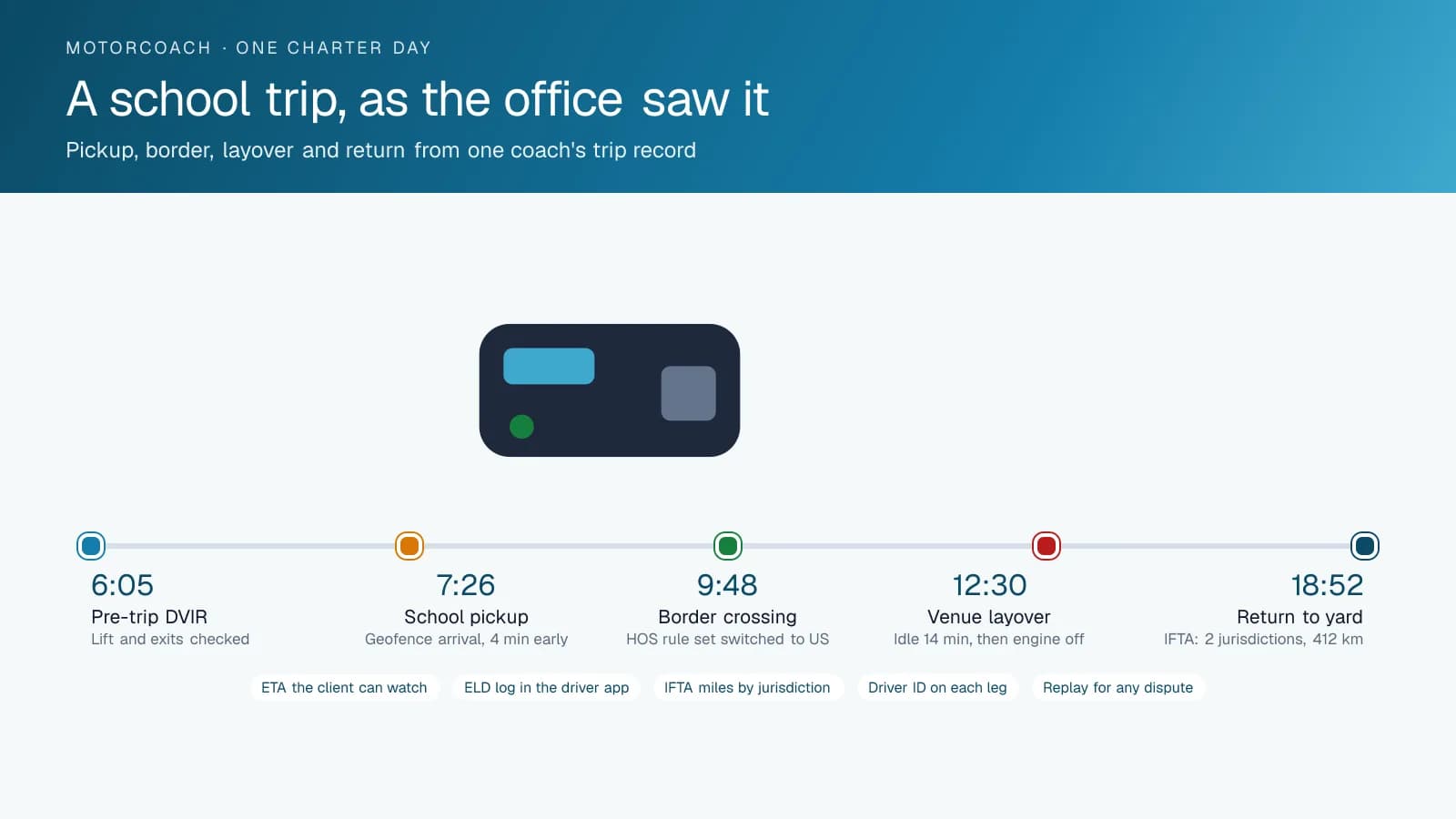
The record answers the disputes that follow. A school says the coach arrived 40 minutes late; the replay shows it at the gate at 7:26. A client refuses to pay for wait time; the geofence log shows the coach outside the venue from 9:10 to 11:45. A tour company reports a driver who took the scenic route; the trip shows the road, the speed and the stops. High Point GPS sets these reports up for a coordinator to pull in a minute, with the client still on the line, and the invoice goes out with the evidence attached.
Hours of service, inspections and the border
Motorcoach drivers fall under the same ELD mandate as truck drivers in the US, and Canadian federal rules require a certified ELD as well. The driver app on a tablet in the cab keeps the driver's daily log, warns before a limit is reached and switches rule sets at the border. When a relief driver takes over at the halfway point, each taps in with their own ID and the logs stay clean. At a roadside inspection, the driver shows the log on the tablet and sends it from the app. The office sees every driver's remaining hours before assigning tomorrow's charter.
The pre-trip inspection is where a tour goes right or wrong. Electronic DVIR in the driver app walks the driver through the coach-specific checklist, including the lavatory, the wheelchair lift and the emergency exits, time-stamps each item and sends a defect to the shop with a photo. A coach with an open defect on a safety item does not leave the yard until it is signed off. Fault codes from the engine reach the shop as they appear, which is how an overheating problem gets caught in the yard on Thursday rather than on a mountain grade on Saturday.
IFTA and fuel, without the spreadsheet
A coach that crosses state and provincial lines every week generates IFTA mileage in every jurisdiction it passes through. The GPS tracking device records odometer and position throughout the trip, and the High Point GPS platform breaks the miles down by jurisdiction for the quarter. Paired with fuel-card data, the return is a report to review rather than a spreadsheet to build from itineraries and receipts. High Point GPS configures the jurisdictions and the fuel integration during setup, and the quarterly report reflects every trip, including the deadhead run home. Auditors get the same trip-level detail if they ask for it.
Fuel is the largest cost after the driver, and a coach idling in a parking lot with the air conditioning on for four hours burns a measurable share of it. Idle reports by coach and by driver show where that happens, separate from the idle that comes with loading passengers. Fuel-card reconciliation flags the transaction that does not match the coach's location at the time of purchase. Over a season, these two reports are usually where the fuel savings come from, and the coaching conversation starts from a specific trip rather than a general reminder.
Driving with passengers aboard
Passengers notice driving, and tour guides report it. Driver scoring in the High Point GPS platform measures speeding, hard braking, fast cornering and seat belt use on each trip, with thresholds set for a coach carrying fifty people rather than a delivery van. The score identifies the driver who needs a conversation and the trip to have it about. AI dash cams add a road-facing view and a driver-facing camera with distraction and fatigue detection, which matters most on the long overnight legs a charter operator runs. Video is retrieved by trip and by event, and the operator sets who can view it.
When a collision happens with a coach full of passengers, the claim is large and the questions come fast. The trip record shows the speed and the braking in the seconds before impact, and the dash cam shows what the driver saw. Insurers review this evidence, and an operator with it on hand argues a claim on the facts rather than on the other party's account. Maintenance records, inspections and hours-of-service logs from the same database complete the picture a regulator or a lawyer will ask for, and they are ready the same day.
Frequently asked questions
Do motorcoach drivers need an ELD?
In the US, drivers of passenger-carrying commercial vehicles who keep records of duty status generally fall under the ELD mandate, with limited exceptions. Canada's federal mandate applies to federally regulated bus operators as well. The driver app on a tablet, paired with the GPS tracking device, is a certified ELD in both countries and switches rule sets at the border.
Can our clients see where the coach is?
Yes. High Point GPS can set up a customer-facing tracking link for a specific coach on a specific day, which a school, a team or a tour company opens in a browser. The client sees the coach and its arrival estimate for the pickup and nothing else about your fleet. The link expires when the trip ends.
Does it produce our IFTA mileage?
Yes. The GPS tracking device records odometer and position for every trip, and the High Point GPS platform summarizes miles by state and province for the quarter. With fuel-card integration, the fuel purchased in each jurisdiction sits beside the miles driven there. High Point GPS configures the report during setup, and the trip-level detail is retained for an audit.
How do we handle two drivers on the same trip?
Each driver logs into the driver app with their own credentials or NFC tag. Hours of service, trips and driver score are attributed to whoever is logged in, and a co-driver can be recorded as such. When the relief driver takes over, the switch takes seconds and the logs stay separate and accurate for both drivers.
What happens if a coach loses cellular coverage on a mountain pass?
The GPS tracking device keeps recording trips, engine data and driver events on the device and uploads them when coverage returns. The live map shows the last known position until then, and the full route appears afterwards. Hours-of-service logs continue in the driver app without a connection and sync when the coach reconnects.
Related solutions
Related guides
- What Is an ELD? A Plain-English Guide for Fleets →
- Hours of Service Rules Explained: The 11 and 14 Hour Limits →
- Canada's ELD Mandate: How It Differs From the US →
- High Point GPS IFTA Reporting: How Automated Fuel Tax Reports Save Fleets Hours →
- High Point GPS DVIR: How Digital Vehicle Inspection Reports Work →
- Public Tracking Portal: Giving Customers and Residents a Live Map Without a Platform Login →
Get a free quote
What are you looking for?