
Industry
GPS Fleet Tracking for Parking Enforcement
GPS fleet tracking for parking enforcement shows where each officer patrolled, beat coverage by shift and a time-stamped record for contested tickets.
Updated September 21, 2026
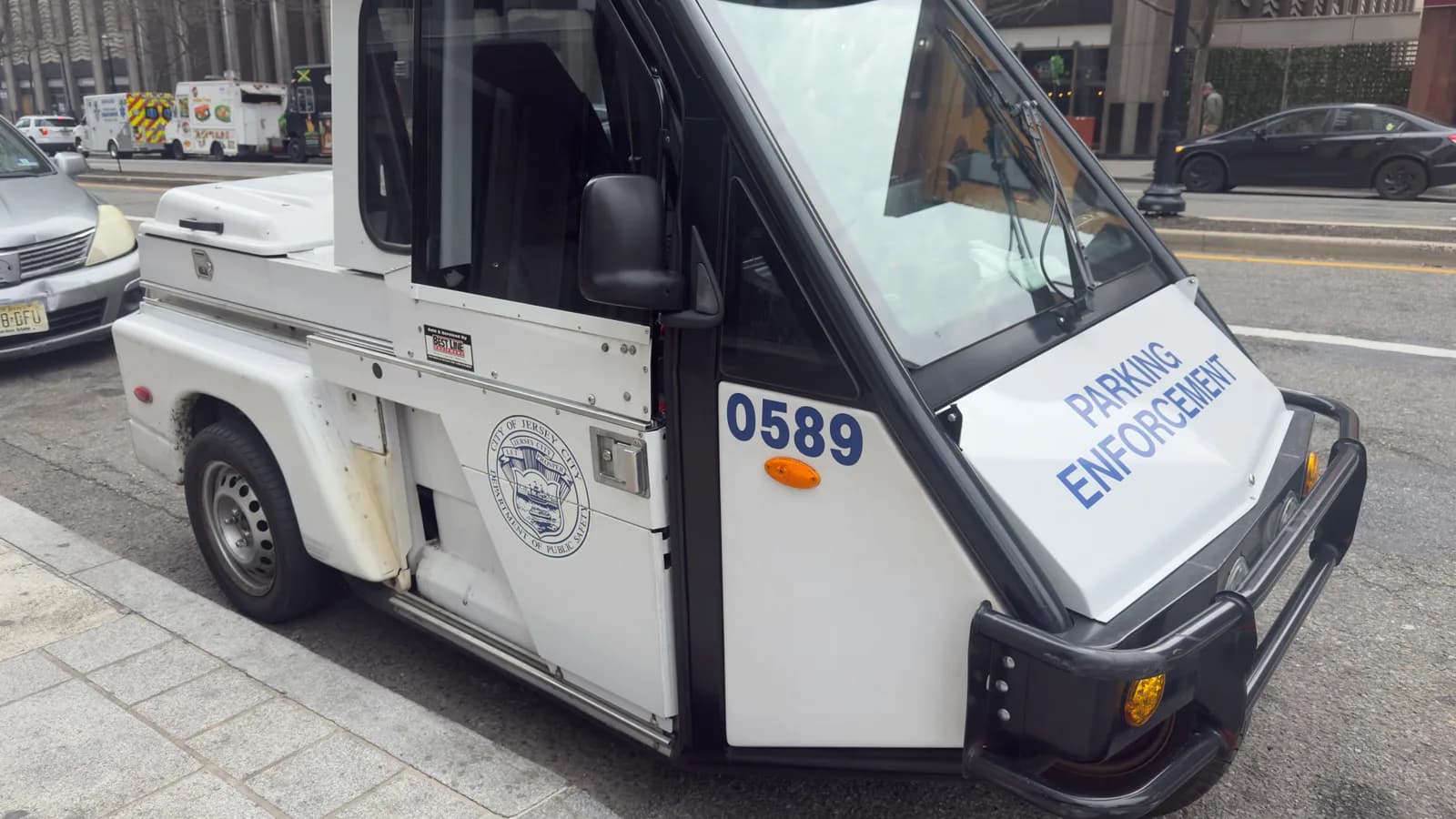
High Point GPS provides GPS fleet tracking for parking enforcement departments, municipal and contracted, that patrol beats in small cars, scooters and carts. The supervisor sees every enforcement vehicle on one live map with the beats drawn as geofences, and the platform keeps a record of each shift. The public watches this work closely. Residents want their street patrolled, merchants want turnover in front of their shops, and any ticket can be contested with a claim about where the officer was and when. The record shows which streets were driven, which lots were entered, how long the officer stayed and where the vehicle stopped. A GPS tracking device covers each vehicle, IOX-AUXM auxiliary inputs read the amber light bar and the plate-recognition camera's power state, and driver ID ties each shift to the officer on it. When a motorist says the car had just been parked, the trip replay shows the officer's vehicle on that block at 10:14 and again at 11:52. When a councillor says a neighbourhood is never patrolled, the beat's coverage report shows every pass. Idling, after-hours use and speeding reports keep the fleet within the municipality's vehicle policy, and engine-hours maintenance keeps scooters and carts running through the season. Where the municipality runs a ticket-management system, the High Point GPS API links the officer's position to the citation record.
Common challenges
- Contested tickets that turn on where the officer's vehicle was and when, with only the officer's word as a record
- Beats meant to be patrolled on a schedule, and no way to show a resident or a councillor that they were
- Officers working alone in lots and garages, with no location record if a confrontation with a motorist turns bad
- Scooters, carts and small cars that sit parked through a shift, unnoticed until a complaint arrives
- Enforcement schedules built without knowing which beats run long and which get covered twice
- Plate-recognition and light-bar equipment the office cannot confirm was used on each shift
How High Point GPS helps
- Every enforcement vehicle, scooter and cart on one live map for the supervisor, with each beat drawn as a geofence
- Coverage records per beat showing which streets and lots were passed, how many times and at what time, on any shift
- Trip replay with the vehicle's path, speed and each stop, ready for a contested ticket or a missed-beat complaint
- Light bar and plate-recognition camera power state read from the vehicle's own circuits through IOX-AUXM auxiliary inputs
- Driver ID with the IOX-NFCREADERA, so each shift and each stop belongs to the officer who logged in
- A panic button wired to the GPS tracking device that sends the vehicle's location to the supervisor or the control room
- Idling, speeding, stationary-time and after-hours use reports that back up the municipality's vehicle policy
- A link to the ticket-management system through the High Point GPS API, matching each citation to the vehicle's position
How does GPS tracking help with a contested parking ticket?
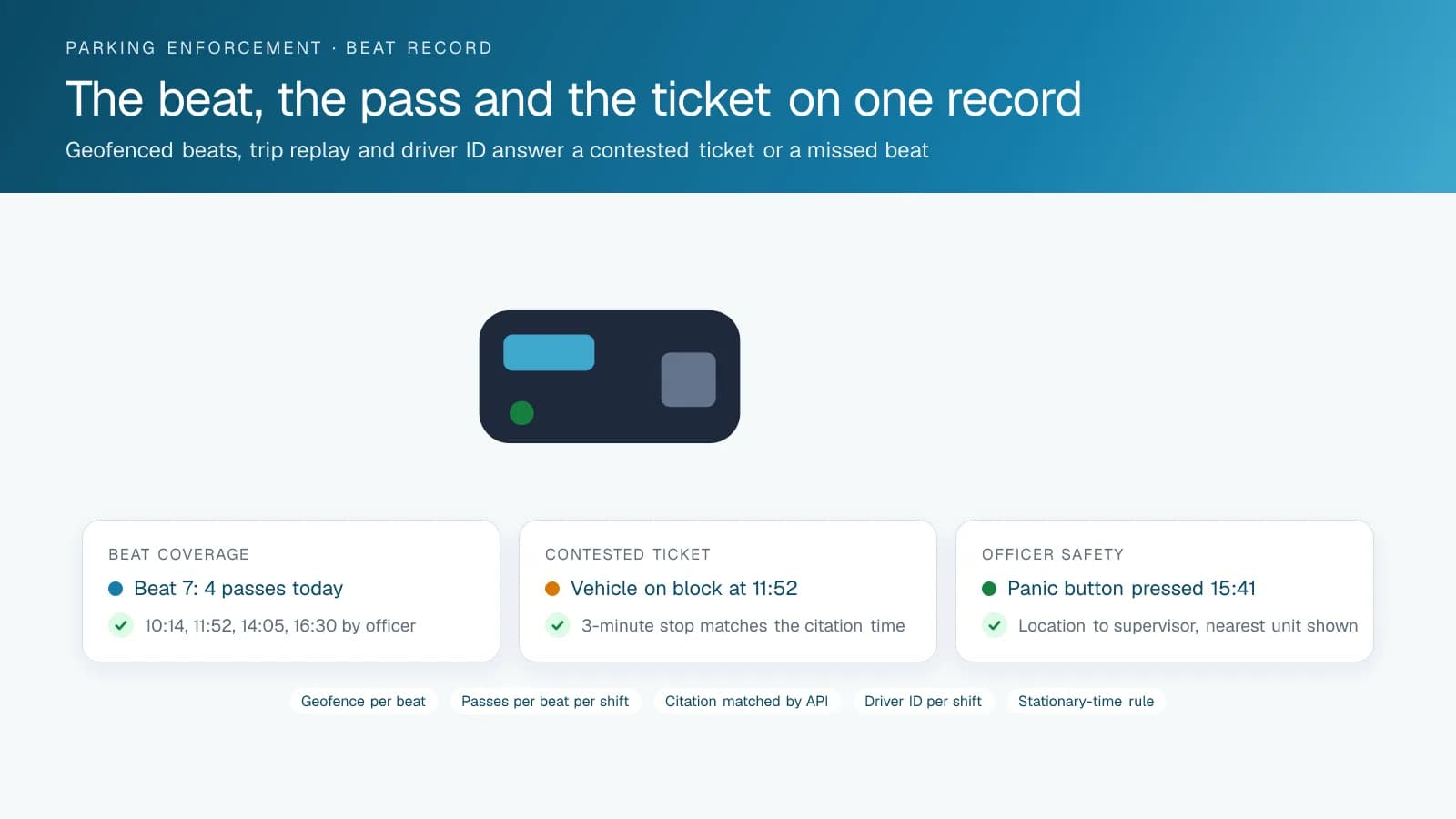
GPS tracking settles a contested parking ticket with the trip replay, which shows when the enforcement vehicle passed the block and when it stopped. Take a motorist who contests an expired-meter ticket and says the car had been parked for five minutes, while the officer's notes say the meter had been expired for an hour. Without tracking, the hearing officer picks between two stories. With it, the replay shows the vehicle passing that block at 10:14, a three-minute stop at 11:52 when the officer wrote the ticket, and the path in between. That supports the officer's account, and producing it takes as long as opening the day's trips.
Where the municipality runs a ticket-management system, High Point GPS connects it through the High Point GPS API, so each citation carries the vehicle's position at the moment of issue. The enforcement office then answers a contested ticket from one record instead of two. With handheld ticketing that is not tied to a vehicle, the officer's driver ID and the vehicle's stops still place the officer on the block at the time on the ticket. In both setups the department has a record the hearing officer can rely on.
Proving the beat was covered
Residents and merchants notice enforcement when it is absent. A street with a two-hour limit that never sees an officer fills with commuters, and the complaint reaches the councillor. With each beat drawn as a geofence, the platform records every pass an enforcement vehicle makes through it, with the streets driven and the time of day. The coverage report for the week shows every beat, the passes made, the gaps and the beats that were covered more than the schedule called for. The supervisor rebalances the schedule from the record instead of from complaints.
The same report answers the councillor. A neighbourhood that says it is never patrolled receives a list of the dates and times an officer passed through, and a neighbourhood that was in fact missed is added to the schedule with the gap visible. Event, snow-route and street-cleaning enforcement, which run on their own calendars, are set up as their own zones with their own rules, so the report for a snow-route enforcement night shows which routes were covered before the plows arrived.
Officer safety and the vehicle policy
Parking enforcement officers are confronted more often than most municipal employees, usually alone and sometimes in a garage or a lot with no one nearby. A panic button wired to the GPS tracking device sends the vehicle's position to the supervisor the moment it is pressed, and the live map shows which other officers are closest. A stationary-time rule flags a vehicle stopped longer than expected in a place where a stop is not expected, and the supervisor checks in. Dash cams on the vehicles add a road-facing record of a confrontation in the street.
The rest of the fleet's discipline is the same as any municipal fleet's. Driver ID through the IOX-NFCREADERA attributes each shift to the officer, and idling, speeding and after-hours use are reported by person. A scooter or cart that is parked for most of a shift shows up on the stationary-time report. A vehicle that leaves the yard on a day the officer was not scheduled shows up on the after-hours report. The department's vehicle policy has a record behind it, and the fleet committee gets the utilization data it asks for.
Keeping small vehicles in service
An enforcement fleet is made of vehicles most shops do not see often: three-wheeled scooters, small carts, compact cars and the occasional pickup for signage and meters. They run short trips all day, idle at every stop and wear out on engine hours more than kilometres. Maintenance reminders in the High Point GPS platform run on engine hours and mileage together, and fault codes from the vehicles that report them reach the shop when they appear. Electronic DVIR in the driver app replaces the paper pre-shift check, and a reported defect becomes a work order before the vehicle is back on the beat.
The IOX-AUXM inputs add the equipment. The light bar's state is recorded, which supports the department's rule that it is on while enforcing. The plate-recognition camera's power state shows whether the camera ran on each shift, and a beat covered with the camera off is visible on the report. High Point GPS installs the hardware on the department's mix of vehicles, including the small ones that need a rugged GPS tracking device or a different mounting, and supports the fleet as it changes with each budget cycle.
Frequently asked questions
Can it help with contested tickets?
Yes. The trip replay shows the enforcement vehicle's path, its stops and the time it passed a block, which places the officer at the ticket's location when it was written. Where the ticket-management system is connected through the High Point GPS API, each citation also carries the vehicle's position at issuance, so one record answers the dispute.
How do we show that a beat was patrolled?
Draw each beat as a geofence, and the platform records every pass an enforcement vehicle makes through it, with the streets driven and the time. The weekly coverage report lists the passes, the gaps and the over-covered beats. You can send it in reply to a resident's complaint and use it to rebalance the schedule.
Does it work on scooters and small carts?
Yes. A GPS tracking device fits most three-wheeled scooters, carts and compact vehicles, and the rugged version of the GPS tracking device covers the ones exposed to weather. High Point GPS looks at each vehicle type in the fleet, picks the mounting and power connection that suits it, and installs the hardware so your department does not have to.
What does it do for officer safety?
A panic button wired to the GPS tracking device sends the vehicle's location to the supervisor as soon as the officer presses it, and the live map shows which officers are nearest. A stationary-time rule flags a vehicle stopped longer than expected where no stop is planned, and dash cams add a road-facing record of any confrontation.
Can officers be identified on shared vehicles?
Yes. An IOX-NFCREADERA reader in each vehicle assigns the shift to the officer who taps in, and every stop, pass and report for that shift carries that officer's name. Officers who share a vehicle across shifts each get their own record, and a vehicle driven without a tap-in appears on the unidentified-driver report for follow-up.
Related solutions
Related guides
- Public Sector Fleet Tracking and Dispatch for Government Fleets →
- Municipal Fleet Tracking: A Buyer's Guide for Cities, Counties and Public Works →
- What Is Geofencing? How It Works in Fleet Tracking →
- Timeline Map: Replaying a Trip Minute by Minute to Settle a Dispute →
- IOX-NFCREADERA: Driver ID by NFC Tap, So Every Trip Has a Name on It →
- Fleet API Explained: What You Can Build With High Point GPS →
Get a free quote
What are you looking for?