
GPS Fleet Tracking & Telematics
The High Point GPS API: What You Can Actually Build
The platform's open SDK exposes real fleet data, trips, faults, EV status, and more, for custom integrations. Here is what the API actually covers.

What the API Actually Exposes
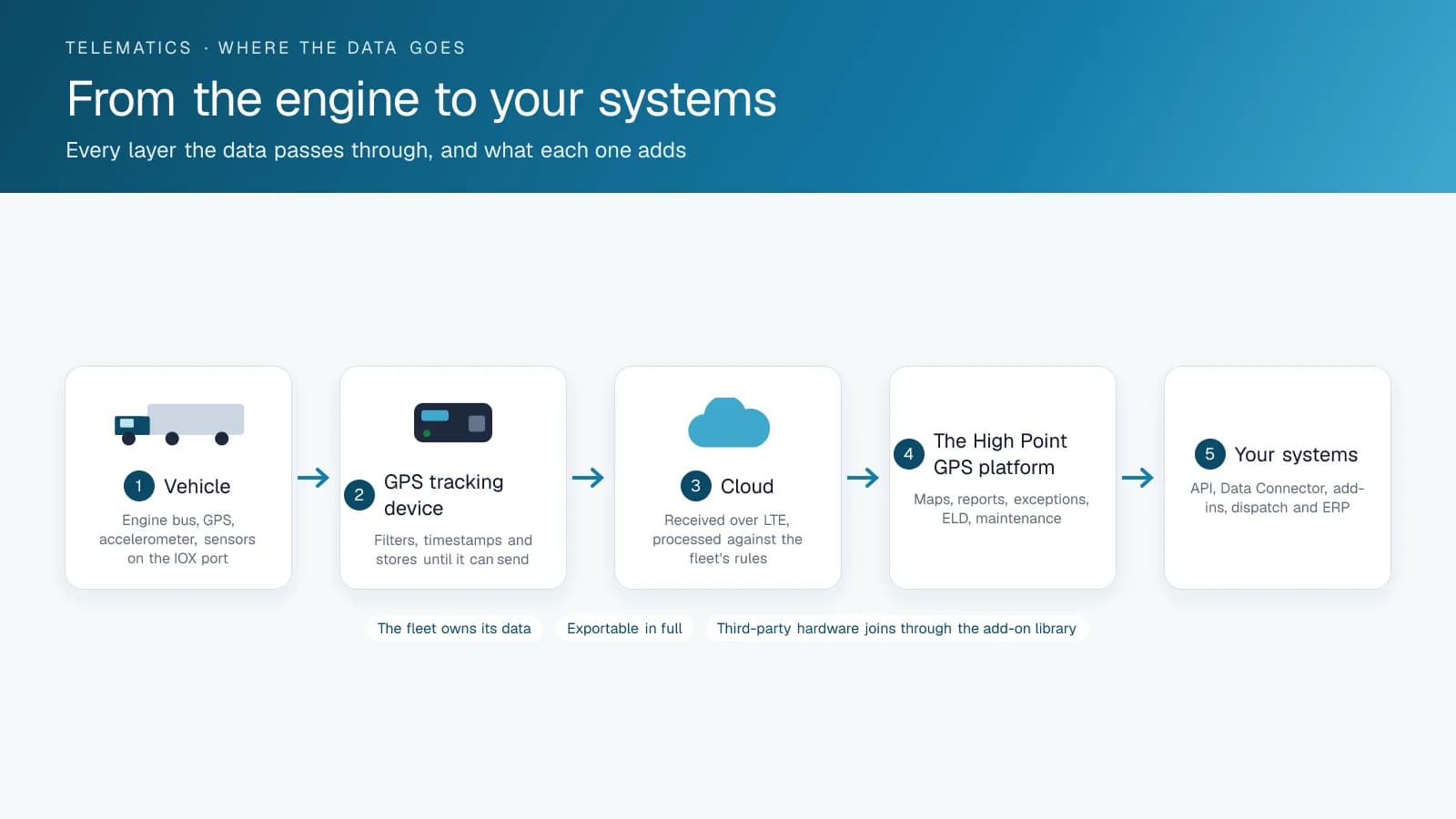
The High Point GPS platform SDK gives developers programmatic access to the same fleet data the platform interface itself is built on: devices, users, groups, zones, trips, locations, engine measurements, fault codes, rules, maintenance records, electric vehicle data, and media metadata. That's not a limited export feed, it's essentially the platform's own data layer, exposed for a developer to build against directly.
That breadth is what makes real integrations possible rather than theoretical. A fuel card reconciliation tool needs trip and location data. A maintenance dashboard needs fault codes and engine measurements. A dispatch system needs live location and zone data. All of that is available through the same SDK, which means a single integration project can pull from multiple data types without stitching together separate, incompatible exports.
How Access Actually Works
There's no separate developer API key to request or manage. Access runs through the High Point GPS platform database and an appropriately scoped user account, which means integration access is tied to the same permission system that governs everything else in the High Point GPS platform, not a parallel access system with its own rules to learn.
The SDK supports both JavaScript and C# development, along with documentation and tooling for building and integrating Add-Ins, the same mechanism that powers add-on library listings and our own custom Add-Ins like GeoDocs. A developer building a custom integration and a developer building an add-on library Add-In are working with fundamentally the same toolkit.
Where a Custom Integration Actually Makes Sense
Not every fleet needs a custom integration, and a lot of common needs, fuel card connections, popular TMS platforms, standard reporting, are already covered by existing add-on library Add-Ins without any custom development. The API becomes worth building against specifically when an off-the-shelf connector doesn't exist for a system a fleet already relies on, or when a workflow is specific enough to that fleet's operation that no generic tool was ever going to fit it exactly.
That's the gap our development team fills: building the custom connector or Add-In when the add-on library genuinely doesn't have an answer, rather than a fleet either living without the integration or forcing a manual workaround between two systems that should just talk to each other directly.
Common Calls, in Plain Terms
The API exposes the same objects the High Point GPS platform screens show, and most integrations use a handful of them.
| What the integration needs | API entity | Typical use |
|---|---|---|
| Where every vehicle is now | DeviceStatusInfo | A dispatch map or a customer portal |
| Trips with start, stop and distance | Trip | Billing, payroll, cost per job |
| Odometer and engine hours | StatusData with diagnostic IDs | Maintenance system work orders |
| Fault codes as they happen | FaultData | Shop tickets opened automatically |
| Exceptions such as speeding or idling | ExceptionEvent | Safety scorecards, HR systems |
| Hours of service and duty status | DutyStatusLog | Dispatch that respects remaining hours |
| Fuel and fill-ups | FuelTransaction, FuelUsed | Fuel card reconciliation, IFTA |
Frequently asked questions
Do I need a separate API key to use the High Point GPS API?
No. Access is through the High Point GPS platform database and a scoped user account, tied to the same permission system used elsewhere in the High Point GPS platform, rather than a separate developer key system.
What programming languages does the platform SDK support?
JavaScript and C#, with documentation and tooling for building and integrating Add-Ins using either.
What kind of data can I actually pull from the High Point GPS API?
Devices, users, groups, zones, trips, locations, engine measurements, fault codes, rules, maintenance records, electric vehicle data, and media metadata, essentially the same data layer the platform's own interface is built on.
When does a fleet actually need a custom integration instead of an add-on library Add-In?
When no existing add-on library listing covers a system the fleet already uses, or when a workflow is specific enough to that fleet's operation that a generic, pre-built tool doesn't fit it exactly.
Related solutions & products
Continue reading
- GPS Fleet Tracking & Management Software overview →
- Add-In vs Add-On: What the Two Words Mean and Which One You Need →
- What Is GeoDocs? Fleet Document Management Inside the High Point GPS Platform →
- What Does a Fleet Tracking Reseller Do? How Buying Through a Partner Works →
- Bus Route Progress: The High Point GPS Platform Add-In That Shows Which Buses Are On Route, Late or Parked →
- More in GPS Fleet Tracking & Telematics →
Get a free quote
What are you looking for?