
Industry
GPS Fleet Tracking for Refrigerated Transport
GPS tracking and temperature monitoring for refrigerated transport fleets: box temperature by position, reefer and door alerts, and cold-chain reports.
Updated September 21, 2026
A refrigerated load is only worth what its temperature log says it is. The receiver checks the pulp temperature at the dock, and if it is out of range the rejection is the carrier's problem unless the carrier can show where the excursion happened. High Point GPS builds a reefer operation on the platform with a GPS tracking device in the tractor, an asset tracker on the trailer and wired or Bluetooth temperature sensors in the box. The result is one record that ties position, reefer status and set-point to the temperature at every point of the trip. The office sees each reefer trailer on the map with its current temperature beside it, and a rule raises an alert when the box drifts toward the limit, when the reefer stops running or when the doors stay open too long at a stop. The temperature history for a load is exported to the receiver or the shipper as a report, which is what a cold-chain audit or a rejection claim turns on. Reefer engine hours and diagnostic codes come off the unit alongside the tractor's, so maintenance follows the hours run rather than the calendar. Hours of service, IFTA mileage, DVIR and driver scoring round out a platform that runs from one High Point GPS platform database whether the carrier hauls produce, frozen food, pharmaceuticals or dairy.
Common challenges
- Load rejections at the receiver's dock with no record showing whether the temperature excursion happened in the trailer or after unloading
- Reefer units that shut down or run out of fuel mid-trip, discovered when the driver checks at the next stop
- Temperature logs on paper or on a download at the end of the trip, too late to save a load already at risk
- Trailers left at a customer's yard with the reefer running, burning fuel and hours nobody planned for
- Reefer maintenance scheduled by date while the units run thousands of hours the shop never sees
- Shippers and auditors asking for continuous temperature records the carrier cannot produce quickly
How High Point GPS helps
- Every reefer trailer on the live map with its current box temperature, set-point and reefer status beside it
- Wired temperature sensors or Bluetooth temperature pucks in the box, reporting through the trailer tracker or the GPS tracking device
- Alerts when the temperature drifts toward the limit, the reefer stops running or the doors stay open too long
- Temperature-by-position history for each load, exported as the cold-chain report a receiver or auditor asks for
- Reefer engine hours and diagnostic codes captured alongside the tractor's for maintenance planning
- Trailer dwell and reefer run-time reports for units left running at customer yards
- ELD hours of service, DVIR and IFTA mileage from the same tractor GPS tracking device
- Door sensors and geofence records tied to each stop, showing how long the box was open and where
Seeing the temperature before the receiver does
A refrigerated carrier's worst call is the one from the receiver's dock. High Point GPS puts a temperature sensor in each zone of the box, wired to the trailer tracker or reporting by Bluetooth to the GPS tracking device. The office sees the reading on the map beside the trailer's position. The rule set is written for the commodity: a produce load might tolerate a brief drift, while a frozen or pharmaceutical load triggers an alert the moment the reading crosses its threshold. The alert reaches dispatch and the driver's phone while the load can still be saved by a reefer restart or a diversion.
Reefer status comes from the unit itself where the model supports it, so the platform knows whether the reefer is in continuous or cycle mode, what the set-point is and whether it is running at all. A reefer that shuts down on fuel or a fault at 3 a.m. on the highway produces an alert at 3:01. The driver checks it at the next safe stop rather than finding warm product at the dock six hours later. The alert history for a trailer shows how often it happens and on which unit.
The temperature log that settles a rejection
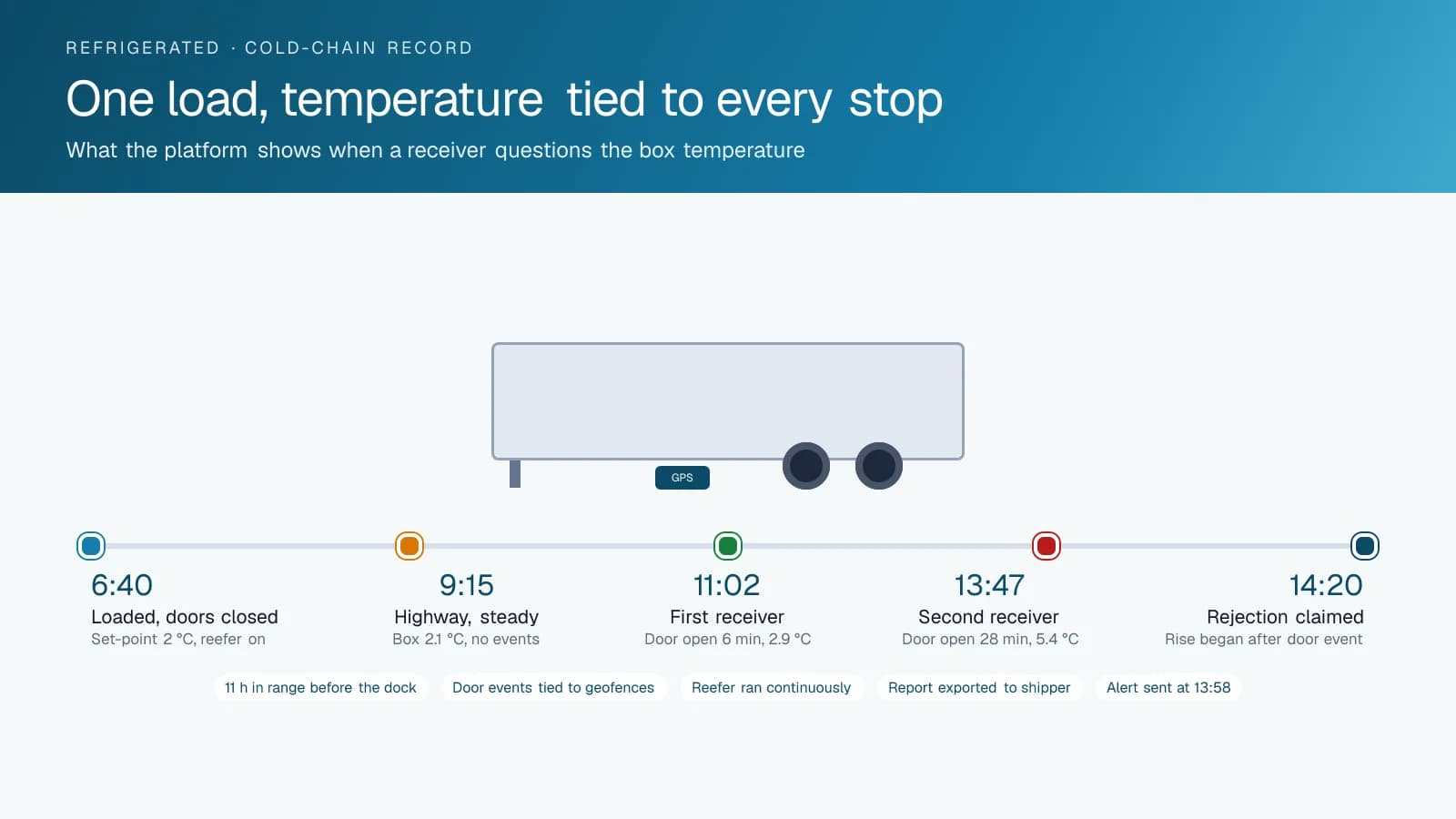
When a load is rejected, the argument is about where the excursion happened. The platform's record ties every temperature reading to the trailer's position, the reefer's status and the door state at that moment. A load that shows 2 °C for eleven hours, a door-open event of twenty-eight minutes at the receiver's dock and a rise only after that event is a load the carrier did not spoil. The temperature report for that load, with the map and the door events, goes to the shipper, the receiver and the insurer as the carrier's case.
The same report satisfies the audits that food and pharmaceutical shippers run on their carriers. A continuous temperature history is available for any trailer and any period from the High Point GPS platform, by load when the trip is tied to a dispatch record. It is produced in minutes rather than assembled from a download and a driver's paperwork. Shippers who require it can be given portal access to the temperature of the trailer carrying their load, on the carrier's terms. Records are kept for the period the carrier's customers require. A single report covers a trailer, a load or a customer.
Doors, stops and trailers left running
Most excursions happen at the doors. A door sensor on the trailer records every open and close, and a geofence around each stop attaches it to the location. The stop record for a multi-drop produce run shows the door open for six minutes at the first receiver and twenty-eight at the second, with the box temperature during each. A dispatcher sees which stops are costing the load its cold, and a driver coached on a specific stop closes the doors between pallets on the next run. The door record is also the first thing an insurer asks for on a spoilage claim.
Reefer trailers are routinely dropped at a customer's yard and left to run. A dwell report by trailer shows which units have been sitting, and a reefer run-time report shows how many hours the unit has burned there, which is the figure behind a reefer-fuel accessorial or a conversation with the customer. Trailer trackers report from the drop lot on their own power, so a trailer that leaves a yard after hours or without a fleet tractor raises an alert whether or not the reefer is on. The alert names the trailer and its last position.
Maintaining two engines, and running the rest of the fleet
A reefer trailer carries an engine the tractor's maintenance program never sees. The platform captures the reefer unit's engine hours and diagnostic codes where the unit supports it, and maintenance reminders run on those hours. The service the manufacturer recommends every few hundred hours is scheduled when the hours arrive, not when the calendar says so. Reefer faults reach the shop while the trailer is in the yard, which is when they are cheapest to fix. Tractor fault codes and engine-hours reminders run beside them from the same database.
Everything a dry-freight carrier needs is here too. The driver app runs ELD hours of service and electronic DVIR with reefer-specific inspection items. IFTA mileage by jurisdiction comes from the trip history, fuel-card integration covers both tractor and reefer fuel, and driver scoring and AI dash cams build the safety record. High Point GPS installs the temperature sensors, door sensors and trailer trackers, configures the alert thresholds per commodity and sets up the cold-chain report a carrier's customers ask for. Drivers see the box temperature in the driver app on the road.
Frequently asked questions
How is the trailer temperature measured?
Wired temperature probes connected to the trailer tracker, or Bluetooth temperature pucks placed in each zone of the box and read by the trailer tracker or the tractor's GPS tracking device. High Point GPS chooses the sensor by trailer type, number of zones and the reporting interval the commodity requires. Readings appear on the map beside the trailer.
Can it show where a temperature excursion happened?
Yes. Every temperature reading is tied to the trailer's position, the reefer status and the door state at that time. The load report shows the temperature over the trip with the stops and door-open events marked, which is what settles a rejection claim or a cold-chain audit. The report exports as a PDF for the shipper.
Does it alert us if the reefer stops running?
Yes. Reefer status is read from the unit where the model supports it, and a rule alerts dispatch and the driver when the reefer stops, when the temperature crosses the threshold set for that commodity or when the doors stay open beyond a set time at a stop. Alerts go by email, text or in the app.
Can shippers and receivers get the temperature record?
Yes. The temperature history for a load is exported as a report with the map and door events, and a shipper who requires it can be given portal access to the trailer carrying their load. Records for any trailer and period are available from the High Point GPS platform for audits. Access is set per customer by the carrier.
Does it track reefer maintenance separately from the tractor?
Yes. Reefer engine hours and diagnostic codes are captured from the unit where supported, and maintenance reminders run on those hours. Tractor maintenance runs on its own engine hours and mileage from the same database, and both sets of fault codes reach the shop as they appear. Reminders schedule service between loads.
Related solutions
Related guides
- Wired Temperature Monitoring for Multi-Compartment Refrigerated Trucks →
- The Bluetooth Temperature Puck: A Ten-Year Wireless Thermometer for Reefers and Coolers →
- Cold Chain Compliance: What GPS Monitoring Does →
- Trailer GPS Tracking: How to Track Trailers With and Without a Truck Attached →
- GPS Fleet Tracking for Food and Beverage Distributors: Routes, Temperature and Delivery Windows →
- Fleet Maintenance: Engine Hours vs. the Calendar →
Get a free quote
What are you looking for?