
Industry
GPS Fleet Tracking for Forestry & Logging
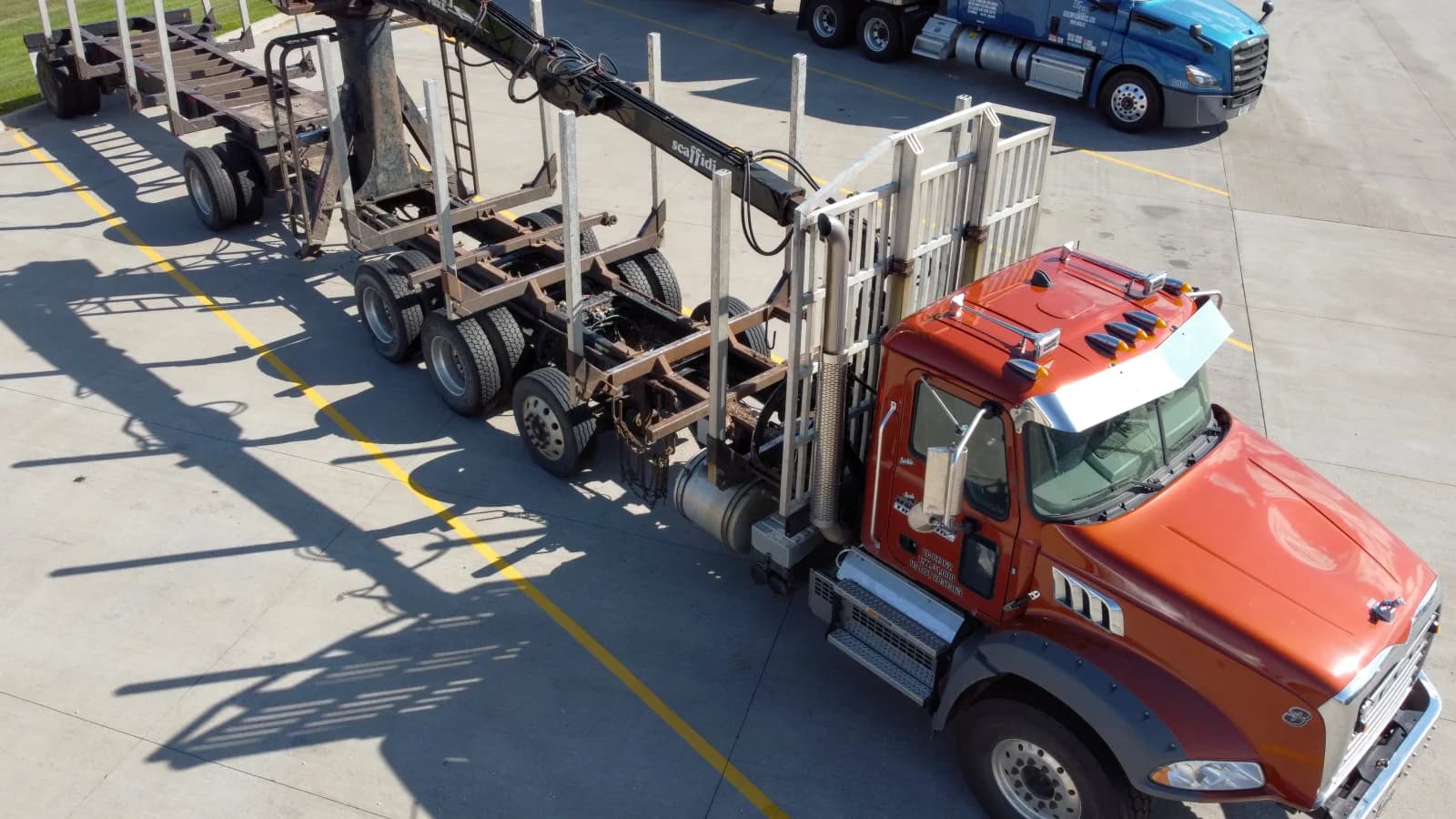
GPS tracking for forestry and logging operations that keeps a record of log trucks on forest roads without cell coverage, counts loads through the scale-house geofence, tracks hours of service on long hauls, and reads engine hours on harvesters and skidders for maintenance.
Updated September 21, 2026
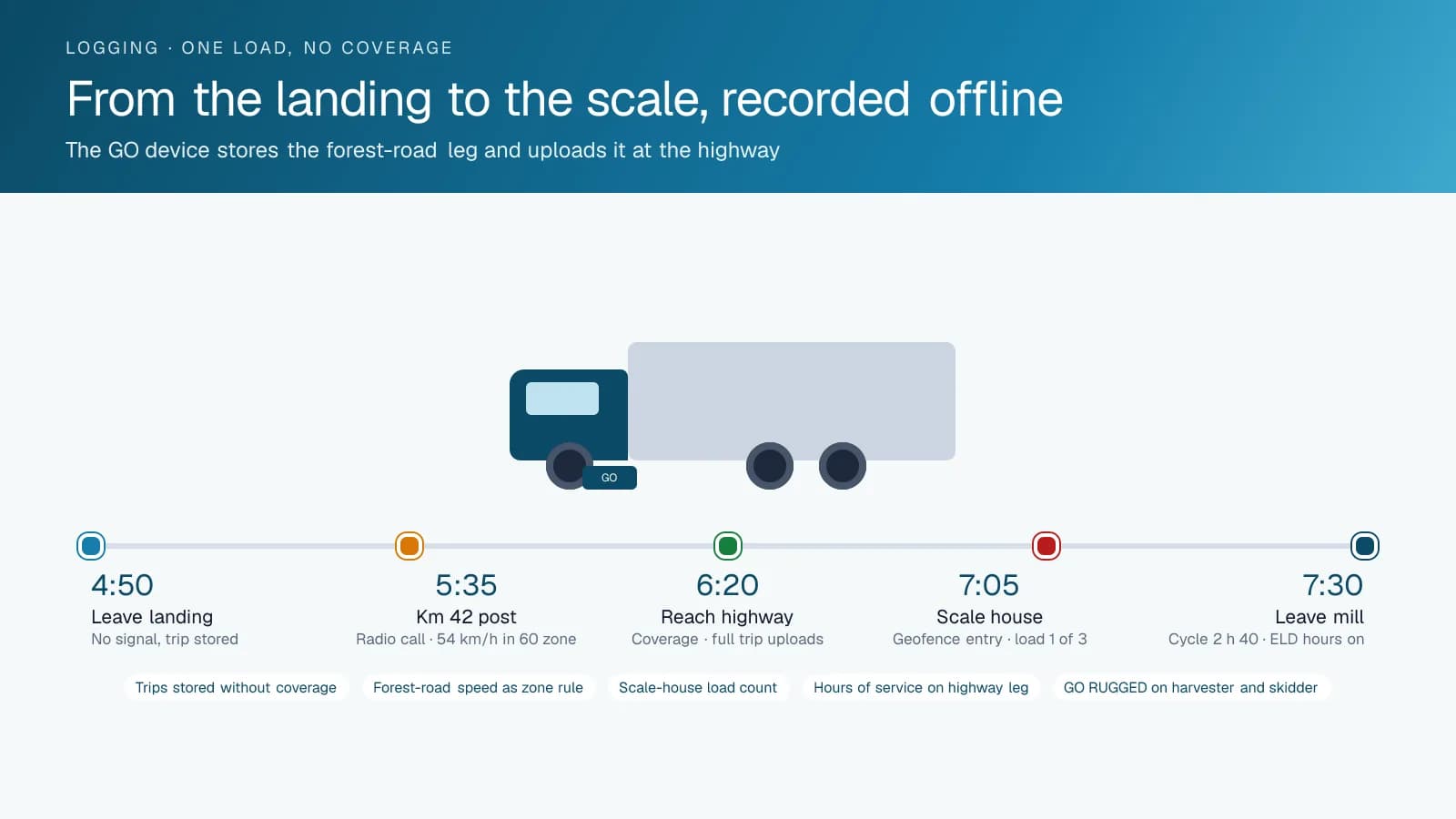
A logging operation runs on roads no map service knows and where a phone has no signal for hours. The trucks leave the block before dawn, call their kilometre posts on the radio, and reach the mill scale by mid-morning. GPS tracking from High Point GPS is built for that: the Geotab GO device records the trip whether or not there is coverage, stores it, and uploads the whole thing the moment the truck reaches the highway. The office sees every trip complete, with the speed on every forest road segment and every stop, even if the truck was out of contact for six hours. A geofence at the scale house counts each truck's loads for the day and the time between loads, which is the number the contractor is paid on and the number the mill reconciles against its scale tickets. On radio-controlled roads, the trip replay shows whether a driver called the posts and kept to the loaded-side rules, and speed limits on the forest road are zone rules the platform enforces. Harvesters, skidders, forwarders and loaders in the block carry a GO RUGGED device that reads engine hours and fault codes, so maintenance runs on real hours and a hydraulic fault reaches the mechanic before the machine is stranded a hundred kilometres from a shop. Drivers on the highway leg fall under hours of service, and the Geotab Drive app records duty status and the pre-trip inspection on the truck and trailer. When a load count is disputed or a truck is late, the record answers.
Common challenges
- Log trucks out of contact for hours on forest roads, with the office learning of a breakdown at the end of the shift
- Loads per day reconciled from mill scale tickets days later, with the contractor and the mill disagreeing
- Speeding on forest roads and radio-call rules ignored, with no record until a truck meets another on a corner
- Harvesters and skidders whose hours come from the operator's memory, and whose faults surface as breakdowns in the block
- Hours-of-service violations on the highway leg found at a scale inspection instead of at dispatch
- Trailers, loaders and fuel tanks left in the block and stolen over a weekend
How High Point GPS helps
- Trips recorded in full without cell coverage, stored on the GO device and uploaded when the truck reaches the highway
- Scale-house geofence that counts each truck's loads for the day and the cycle time between loads
- Forest-road speed limits as zone rules, with speeding and hard braking recorded by segment
- Trip replay showing where the truck stopped and for how long, with the radio-post sequence visible
- GO RUGGED devices on harvesters, skidders, forwarders and loaders for engine hours, idle time and fault codes
- Maintenance reminders on real engine hours for machines that are days from the nearest shop
- ELD hours of service and electronic DVIR on the truck and trailer in the Geotab Drive app
- Battery trackers on trailers, loaders and fuel tanks left in the block, with movement alerts
A Full Trip Record Where There Is No Signal
The first question about tracking on forest roads is whether it works without coverage. It does: the GO device records position, speed and engine data on its own, stores the trip when there is no cellular signal, and uploads it as soon as the truck reaches coverage on the highway. The office does not see the truck live while it is in the block, but by the time it reaches the mill, the full trip is in MyGeotab with every segment, every stop and every speed. A dispatcher who wants to know where a truck was at 5:40 gets the answer when the truck comes into range, and the answer is complete.
That record matters most when something goes wrong. A truck that has not reached the scale by 10:00 has a last known position on the map from the moment it left coverage, and the replay of the previous days' trips shows where the driver usually is at that hour. A breakdown on a spur road is a location for the service truck rather than a search. When a truck meets another on a corner and the loaded truck's driver says he called the post, the replay shows where he was, how fast he was going and whether he stopped at the pullout.
Loads per Day, Counted at the Scale-House Geofence
A logging contractor is paid by the load or the tonne, and the count is the argument. A geofence around the mill's scale house records each truck's arrival and departure, and each arrival is a load. MyGeotab reports loads per truck per day, the time between loads and the average cycle from the block to the scale and back. The count is independent of the mill's tickets and available the same afternoon, which is how a contractor knows before the end of the month whether the mill's reconciliation is going to match. When it does not, the times and positions of each load are in the record.
The cycle time between loads is where the money in a logging season is made or lost. The report shows how long each truck spent at the landing waiting on the loader, on the forest road in each direction, in the queue at the scale and unloading. A landing where trucks wait forty minutes needs a second loader or a different schedule; a scale queue that builds every morning at 8:00 needs a staggered departure from the block. High Point GPS sets up the report so the woods foreman and the office see the same numbers, by truck and by day.
Forest-Road Rules and the Drivers Who Follow Them
Forest roads have speed limits, radio-call posts and loaded-side rules, and none of them is enforced by anyone but the drivers themselves. Each forest road is a zone in MyGeotab with its speed limit as a rule, and every trip records speed by segment inside it. A driver who runs the loaded side at 80 where the limit is 60 shows up in the driver scoring the same day, with the segment and the time. Hard braking on a switchback and a truck that did not slow at a known blind corner are events the woods foreman can see and raise before the next shift.
AI dash cams on the log trucks add the picture. A road-facing camera records the corner where two trucks met, a washout that opened overnight or a moose at dusk, and the footage is retrieved by event without downloading a day of video over a slow connection. Driver ID by NFC fob ties trips to the driver, which matters when a truck runs two shifts. On the highway leg to the mill, the Geotab Drive app records hours of service under the ELD rules in either country, and the dispatcher sees which drivers have the hours left for a second load.
Harvesters, Skidders and the Machines in the Block
A harvester in the block is the most expensive machine the contractor owns and the farthest from a mechanic. A GO RUGGED device on the harvester, the skidder, the forwarder and the loader reads engine hours, idle time and fault codes from the machine and stores them until the machine, or a truck passing the landing, is in range. Maintenance reminders run on those hours, so a 500-hour hydraulic service on a skidder is scheduled before the machine reaches it. A fault code that appears on Tuesday is the reason the mechanic drives out on Wednesday with the right part rather than on Friday after the machine stops.
Utilization comes from the same data. A skidder that ran nine hours and idled four is a number the contractor sees at the end of the week, and a loader that sat two hours waiting for trucks is the other half of the cycle-time report. Battery trackers on trailers, the fuel tank and the loader left at the landing over a weekend report their position on a schedule and raise an alert the moment they move. Electronic DVIR on the machines in the Geotab Drive app gives the operator a walk-around checklist for tracks, hoses and the saw, with a defect going to the mechanic as a work order.
Frequently asked questions
Does tracking work on forest roads with no cell coverage?
Yes. The GO device records the trip on its own and stores it while there is no signal, then uploads it when the truck reaches coverage on the highway. The office does not see the truck live in the block, but the full trip, with every stop and speed, is in MyGeotab by the time the truck reaches the mill.
How are loads per day counted?
A geofence around the mill's scale house records each truck's arrival and departure, and each arrival is one load. MyGeotab reports loads per truck per day and the time between loads. The count is independent of the mill's scale tickets and available the same afternoon, with the time and position of each load.
Can it enforce speed limits on forest roads?
Each forest road is a zone with its speed limit as a rule, and every trip records speed by segment inside it. Speeding, hard braking and a truck that did not slow at a known corner show up in the driver scoring the same day, with the segment and the time, ready for the woods foreman to raise.
Does it track harvesters and skidders?
A GO RUGGED device on each machine reads engine hours, idle time and fault codes and stores them until the machine or a passing truck is in range. Maintenance reminders run on real hours, and a fault code reaches the mechanic before the machine stops in the block, so the service truck goes out with the right part.
What about hours of service on the highway leg?
Drivers on trucks under the ELD mandate log duty status in the Geotab Drive app from the GO device in the truck, and the dispatcher sees remaining hours before assigning a second load. The electronic DVIR for the truck and trailer runs on the same tablet at the start of the shift.
Related solutions
Related guides
- GPS vs. Cellular Tracking: How Fleet Tracking Actually Connects →
- How Geofencing Works for Fleet Tracking →
- Fleet Maintenance: Engine Hours vs. the Calendar →
- Hours of Service Rules Explained: The 11 and 14 Hour Limits →
- Canada Hours of Service Rules: Cycles and the 13-Hour Limit →
- Equipment Theft Recovery: How GPS Gets Stolen Machines and Trailers Back →
Get a free quote
What are you looking for?