
Industry
GPS Fleet Tracking for Non-Emergency Medical Transportation
GPS tracking for NEMT fleets time-stamps every pickup and drop-off, logs trip distance and passenger boarding, and gives brokers records they can audit.
Updated September 21, 2026
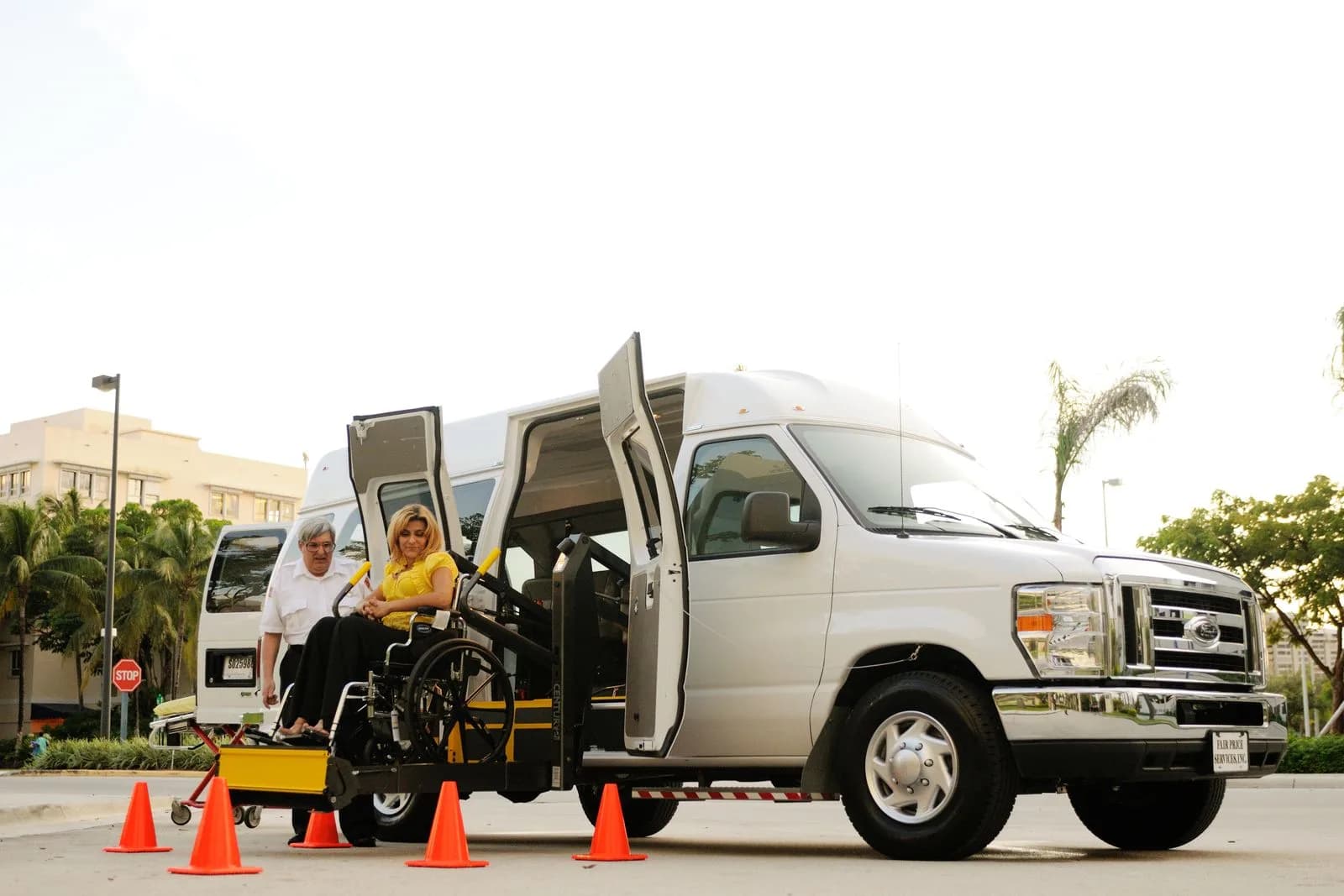
High Point GPS provides GPS tracking for non-emergency medical transportation (NEMT) providers, the companies that run wheelchair vans and medical transport under contracts with brokers, hospitals and public programs such as Medicaid in the US. It records every trip from the vehicle itself, so the claim you send matches what the van did. You are paid per trip and audited per trip. Brokers, public programs and hospital contracts want the pickup time, the drop-off time, the distance and proof that the passenger was carried, and a claim missing any of the four gets denied. A geofence at the pickup address and another at the clinic time-stamp arrival and departure, the trip record holds the distance, and a passenger ID reader or a driver confirmation in the app marks the passenger aboard. Dispatch sees every van on one live map with its next trip, so a van running late gets reassigned before the passenger misses a dialysis appointment. Driver-behaviour reporting held to a passenger-carrying standard, wheelchair-lift monitoring through the vehicle's own circuits, electronic pre-trip inspections and AI dash cams build the safety record your contracts require and your insurer prices. High Point GPS also connects the platform to the broker's trip software, so the office confirms each trip once and bills from the same record.
Common challenges
- Claims denied because the pickup and drop-off times on the trip log do not match the broker's system
- Audits asking for proof a passenger was carried, answered from a driver's handwritten sheet
- Dialysis and treatment appointments missed because dispatch could not see a van running late
- No record of wheelchair-lift use or of how the van was driven with a passenger aboard
- Trip data keyed in twice, once in the broker's portal and again for the company's own billing
- Insurance renewals priced with no driver-behaviour evidence to put on the table
How High Point GPS helps
- Every van on one live map, with its assigned trips, pickup times and the passenger's appointment time
- Geofenced pickup and drop-off records that time-stamp arrival and departure at both ends of each trip
- Passenger-aboard confirmation through an ID card reader or a tap in the driver app, tied to the trip
- Trip distance and route taken from the vehicle, so the mileage claimed to the broker matches
- Integration with broker and trip-management software, so each trip record flows to billing once
- Wheelchair-lift and door status read through the auxiliary inputs on the GPS tracking device and logged with each stop
- Driver scoring set for passenger transport, with speeding, hard braking and cornering weighted higher when a passenger is aboard
- AI dash cams, electronic DVIR and engine-hours maintenance for the safety file your contracts ask for
How does GPS tracking build NEMT trip records that survive an audit?
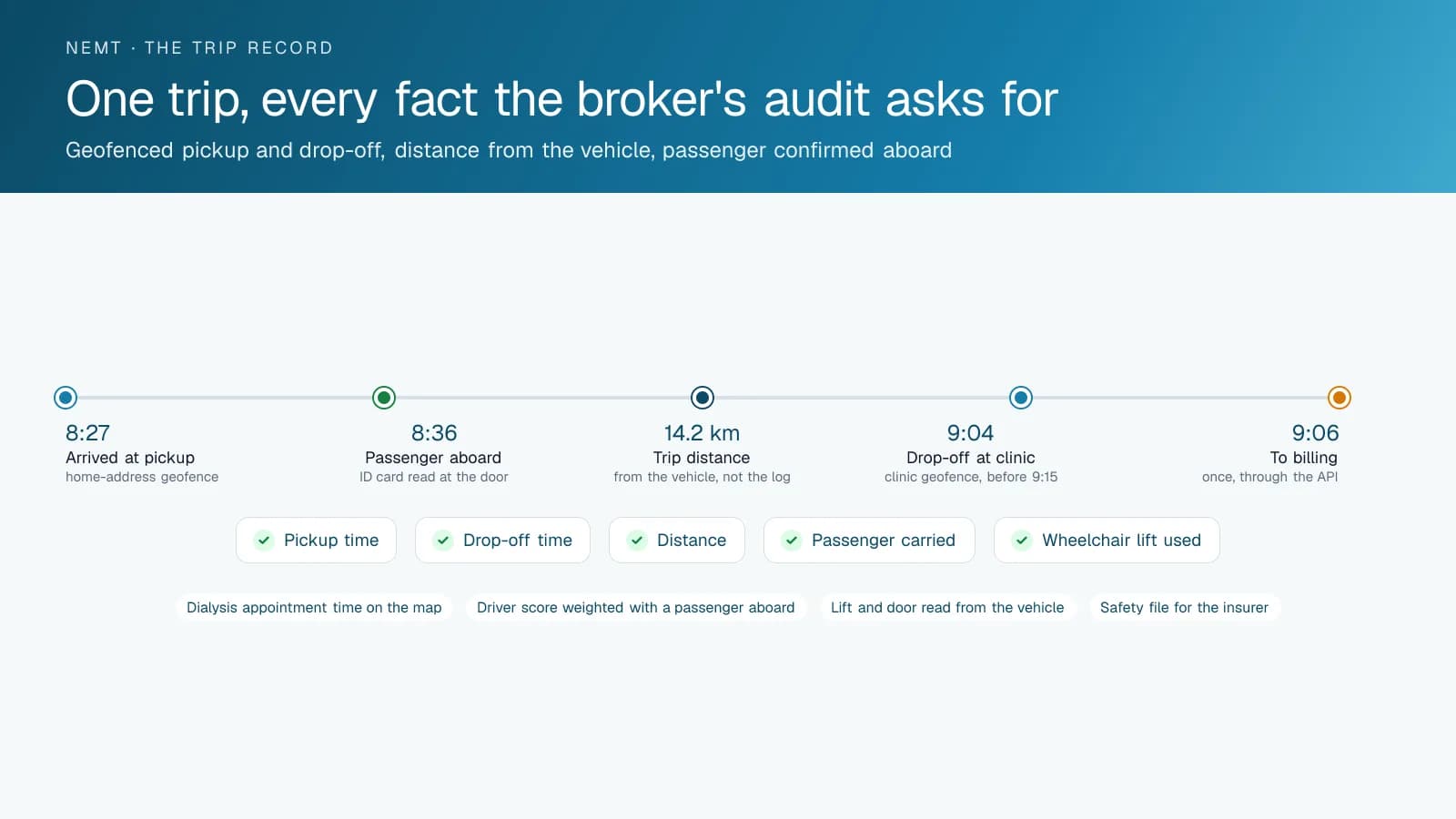
GPS tracking builds each NEMT trip record from the van, so the times and distance a broker audits come from the vehicle and not from the driver's sheet. Say the broker's trip authorization has the passenger picked up at 8:30 at a home address and delivered to a clinic by 9:15. A geofence around the home records the arrival at 8:27 and the departure at 8:36, the trip carries the 14.2 kilometres to the clinic, and the clinic geofence records the drop-off at 9:04. The driver confirmed the passenger aboard with a tap in the app, or the passenger's ID card was read at the door. Every fact the audit asks for sits in one record, with the vehicle and driver attached.
High Point GPS connects that record to the broker and trip-management systems NEMT companies work with, so you confirm a completed trip once and it flows to billing with its times and mileage. The office stops re-keying trips into a portal, and the claim that reaches the broker matches what the vehicle did. If you hold several broker contracts, you run them all from the same High Point GPS platform database, with reporting built to each contract's format.
Keeping Appointments When the Day Goes Wrong
A dialysis patient who misses a session is a medical problem, and the provider who caused it is a contract problem. Dispatch sees every van on the live map with its next pickup and the passenger's appointment time, so a van that is running late is visible while there is still time to do something about it. The dispatcher reassigns the pickup to a nearer van, or calls the clinic with a real arrival time. Multi-passenger runs are built with the drive times in view, which is how a wheelchair van carries three passengers to three clinics without any of them waiting an hour.
The same map answers the passenger's family and the clinic's front desk. Where is the van, when will it arrive, did it leave yet. Companies that want to go further send arrival notifications from the platform, so the passenger is at the door when the van pulls up and the driver's dwell time drops.
Safety With a Passenger Aboard
The driving standard for a van carrying a dialysis patient or a wheelchair user is not the standard for a delivery van, and the platform's rules reflect that. Speeding, hard braking and fast cornering are recorded on every trip, and events that happen with a passenger aboard, known from the trip status, are weighted more heavily in the driver's score. Supervisors coach from a specific event on a specific trip, and the record of that coaching is part of the safety file the contract audit asks for.
Wheelchair-lift operation is read through the vehicle's own circuits with an IOX-AUXM module, so each stop shows when the lift was deployed and how long it took, and a lift that is never used on a wheelchair trip is a question worth asking. AI dash cams add the road-facing and driver-facing view: distraction, fatigue and a passenger incident are recorded by event, and the footage is retrieved in minutes when a complaint or a claim arrives.
Inspections, Maintenance and the Insurer
Many NEMT contracts call for a daily vehicle inspection, and some vehicles also fall under inspection rules that vary by province and state. Electronic DVIR in the driver app walks the driver through the vehicle- and lift-specific checklist, time-stamps each item and routes a defect to maintenance before the van takes its first passenger. Maintenance reminders run on mileage and engine hours per van, and engine fault codes are sent to the shop as they are logged, which matters most for the lift-equipped vans that are hardest to replace on a busy morning.
Every one of those records has a second use at the insurance renewal. A year of driver scores, dash-cam events resolved, inspections completed and maintenance on schedule is the file an insurer prices from, and NEMT companies that bring it to the renewal negotiate from evidence and not from a loss run alone.
Frequently asked questions
Does it integrate with our broker's software?
In most cases, yes. The platform has an open API, and High Point GPS builds the connection to the broker and trip-management systems NEMT companies use. A completed trip then flows to billing with its pickup and drop-off times and its mileage, so the office does not re-key it into a portal and the claim matches the vehicle record.
How does it prove the passenger was in the vehicle?
A passenger ID card reader at the door, or a driver confirmation in the app at pickup and drop-off, marks the passenger aboard and ties it to the trip record. Add the geofenced arrival and departure times and the trip distance, and the record shows the passenger was carried from the pickup address to the destination.
Can it record wheelchair-lift use?
Yes. An IOX-AUXM module on the GPS tracking device reads the lift and door circuits, so each stop shows when the lift was deployed and how long it stayed down. That detail supports the trip record on wheelchair trips and shows a contract auditor that the lift is being used the way the trip requires.
Will dispatch see when a van is running late?
Yes. Every van appears on the live map with its assigned trips, its pickup times and each passenger's appointment time. A van that falls behind shows up while there is still time to act, so the dispatcher can hand the pickup to a nearer van or call the clinic with a real arrival time.
What does it do for our insurance renewal?
It gives the insurer a file to price from: driver scores, dash-cam events and how each was handled, inspections completed and maintenance done on schedule. NEMT companies that bring that evidence to the renewal have something to negotiate with beyond the loss run, which on its own shows only the claims.
Related solutions
Related guides
- NEMT Fleet Tracking: GPS for Non-Emergency Medical Transportation Vehicles →
- NEMT Dispatch Software: What NEMT Software Has to Handle →
- Passenger ID: Recording Every Student or Employee Boarding With a Card Tap →
- What Is Geofencing? How It Works in Fleet Tracking →
- How Does a Digital DVIR Work? Inspections, Defects and Repairs →
- Do Dash Cams Lower Insurance? How Fleets Get the Discount →
Get a free quote
- Over 500 fleets
- Since 2013
- 4.9 on Google (19 reviews)
What are you looking for?
Prefer to talk?Call 1-800-613-6323[email protected]