
Industry
GPS Fleet Tracking for Taxi, Limousine & Chauffeur Services
GPS tracking for taxi, limousine and chauffeur fleets that shows dispatch every available car, ties each ride to the driver behind the wheel, keeps hours and vehicle condition in line with the licensing authority, and settles a customer dispute with the trip replay.
Updated September 21, 2026
A passenger fleet sells time and trust: the car arrives when promised, the driver is who the company says, and the ride is what the customer was billed for. GPS tracking for taxi, limousine and chauffeur services puts every sedan, SUV, van and stretch on one live map for dispatch, with the driver logged in through an IOX-NFCREADERA card so each trip is tied to a named, licensed person rather than to a car that three people drive in a week. Geofences around the airport queue, the hotel ranks and the event venues record when a car entered and left, which is the answer when a customer says the driver was late or a driver says he waited an hour. When a passenger disputes a fare or a route, the trip replay shows the road taken, the speed and the stops, and the AI dash cam clip shows what happened in the car if the company runs cabin cameras. Driver hours are recorded from the ignition and the login, which is what a licensing authority or a corporate account asks for when it audits a fleet's fatigue policy. Electronic DVIR inspections in the Geotab Drive app keep the vehicle condition on record before each shift, and engine-hours maintenance with fault codes keeps the cars that run twenty hours a day out of unplanned downtime. High Point GPS sets the platform up for owner-operator fleets and corporate chauffeur operations alike.
Common challenges
- Dispatch working from radio check-ins and guesswork about which car is free and closest
- Cars shared between drivers with no record of who was actually behind the wheel on a given trip
- Customer complaints about a late pickup, a long route or a driver's conduct with no record to check against
- Driver hours limits from the licensing authority or corporate accounts that the company cannot demonstrate it enforces
- Airport queue and rank time that nobody can measure, so nobody knows if the airport run pays
- Pre-shift inspections skipped or faked, with vehicle condition complaints reaching the company through the customer
How High Point GPS helps
- Live dispatch map of every car with status, driver logged in and distance to the next pickup
- Driver ID through the IOX-NFCREADERA so every trip and every driving event is attributed to a named driver
- Geofences around the airport queue, hotel ranks and venues that record entry, wait time and exit
- Trip replay with route, speed and stops for any ride, ready when a customer disputes a fare or a route
- AI dash cams with road-facing and optional cabin-facing views, retrieved by trip and by event
- Driver hours from ignition and login, reported against the limit the licensing authority or the account requires
- Electronic pre-shift DVIR in the Geotab Drive app with defects routed to the shop before the car takes a passenger
- Maintenance on engine hours and mileage with fault codes, for cars that run two shifts a day
Dispatch That Sees the Cars
A dispatcher who can see the fleet sends the right car. Every vehicle sits on one live map with its status, the driver logged in and the distance to a new pickup, and the dispatcher assigns the ride to the car that is actually nearest rather than the one that answered the radio first. A corporate account with a standing pickup at a hotel sees the car approaching. A car that has been sitting at the airport cell lot for ninety minutes is visible, and so is the one that just cleared a drop-off two blocks from a new request. High Point GPS sets the map up for the dispatch desk, and the open API connects it to the company's booking software when the fleet runs one.
The same map answers the customer on the phone. A passenger asks where the car is, and dispatch reads the position and the estimated arrival from the screen. A passenger asks why the car has not arrived, and the trip history shows whether it was dispatched late, stuck in traffic or sent to the wrong address. Trips are recorded on the GO device even when the car is in a parking garage with no signal, so the pickup at the underground hotel entrance is on the record once the car surfaces.
The Driver Behind the Wheel
In a fleet where cars change hands between shifts, the vehicle's record is not the driver's record. The IOX-NFCREADERA reader on the GO device asks the driver to tap a card at the start of the shift, and every trip, every speeding event and every hard brake from then on is attributed to that driver until the next login. When a licensing authority asks who was driving the car on a given ride, the answer is in the platform. When a corporate account requires that only vetted drivers serve its executives, the login record shows compliance without a paper log.
The login also opens the hours record. Ignition and login times give the start of a shift, and the platform reports hours driven against the limit the company, the licensing authority or the account sets. A driver approaching the limit shows up on the dispatch screen before the next ride is assigned. Driver scoring flags the habits that matter in a passenger vehicle, such as hard acceleration with a client in the back, and the coaching conversation starts from a specific trip on a specific day rather than a general complaint.
Settling Disputes With the Trip Replay
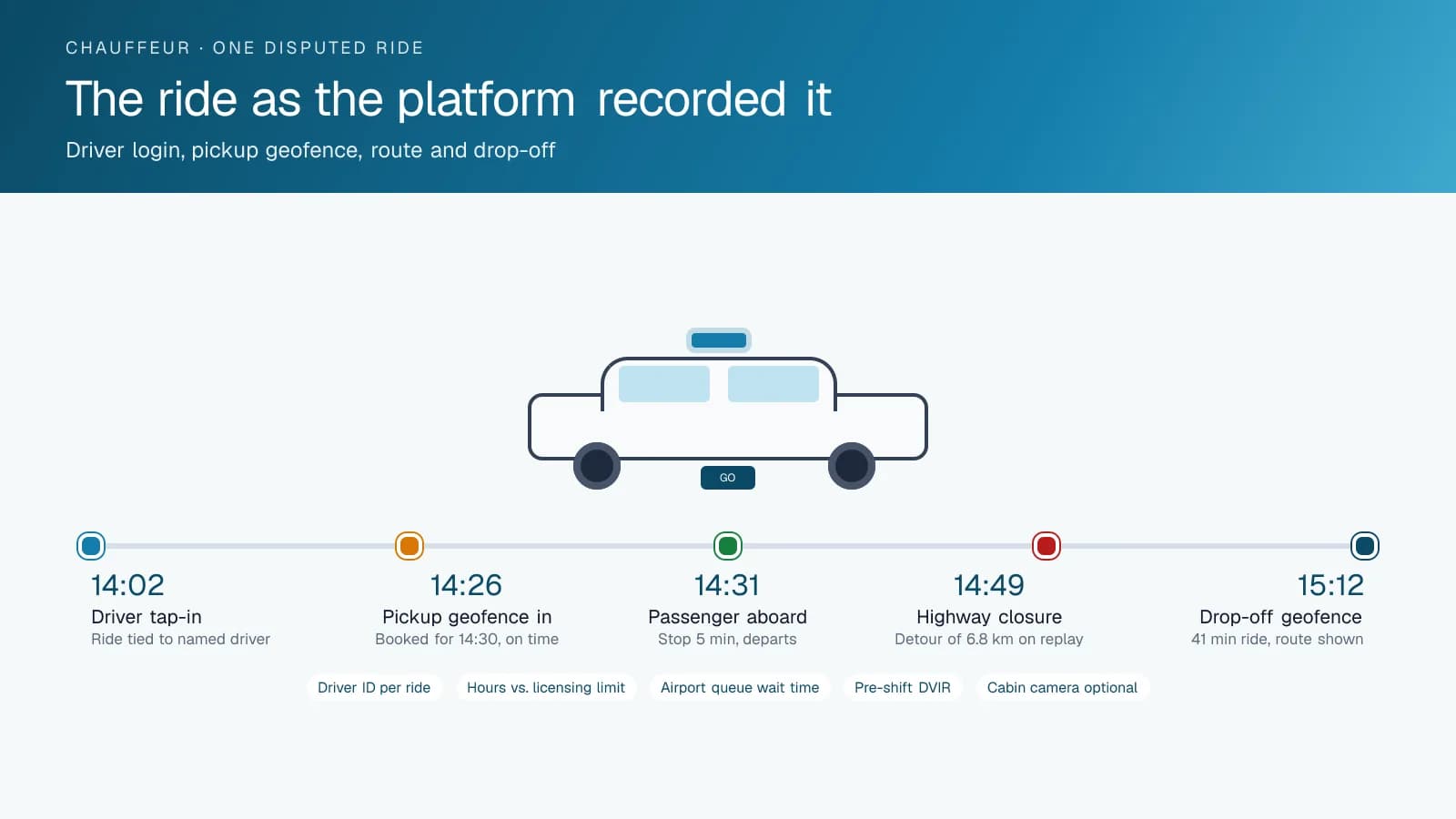
A fare dispute is a conversation about a route. The trip replay shows the road the car took, the speed on each segment, every stop and the time at each one, and a manager reviewing a complaint sees within a minute whether the driver went the long way or the highway was closed. A complaint that the driver was late is answered by the geofence on the pickup address and the time the car entered it. A claim that the car never arrived is answered the same way. High Point GPS sets these reports up so the person handling complaints can pull the ride by date and driver and see the whole trip on one screen.
Some disputes are about conduct rather than routes. AI dash cams with a road-facing view record what happened outside, and a cabin-facing camera, where the company chooses to run one and where local rules allow, records what happened inside. Clips are retrieved by trip and by event, and a passenger's complaint or a driver's report of an abusive fare is reviewed from footage rather than from two conflicting accounts. The company sets retention and access, and the same footage is what an insurer asks for after a collision with another vehicle.
Airport Queues, Vehicle Condition and Uptime
The airport run is either the best money in the fleet or the worst, and most operators do not know which. A geofence around the airport holding lot records when each car entered the queue and when it left with a fare, and a report by hour of day shows the average wait. An operator who sees a two-hour average on weekday afternoons and a twenty-minute average on Sunday evenings staffs the airport accordingly. The same geofences on hotel ranks and event venues show which of them are worth a car sitting idle.
Passengers judge the fleet by the car they sit in. Electronic DVIR in the Geotab Drive app has the driver walk through the vehicle before the shift, with the tires, lights, interior and any damage recorded and time-stamped, and a defect goes to the shop before the car takes its first passenger. Maintenance reminders on engine hours and mileage keep the two-shift cars serviced on time, and fault codes reach the shop the day the engine logs them. The car that would have stalled on a wedding run gets its charging fault fixed on Tuesday morning instead.
Frequently asked questions
Can I tell which driver was in the car on a specific trip?
Yes. The IOX-NFCREADERA reader on the GO device has each driver tap a card at the start of a shift, and every trip and driving event from then until the next login is attributed to that driver. A licensing authority or a corporate account asking who drove a ride gets the answer from the platform.
How does the trip replay help with a fare dispute?
The replay shows the route the car took, the speed on each segment, every stop and the time at each, for any ride on any day. A manager reviewing a complaint sees whether the driver took the long way or the direct road was closed, and the geofence at the pickup address gives the arrival time to the minute.
Can the system record driver hours for our licensing authority?
Yes. Ignition and login times give the start and end of each shift, and the platform reports hours driven per driver against the limit the company or the authority sets. A driver approaching the limit is visible on the dispatch screen before the next ride is assigned, and the report is exported for an audit.
Does the dash cam record inside the car?
A road-facing camera records what happens outside the car. A cabin-facing camera is optional, and whether to run one depends on the company's policy and local rules. Where it is used, clips are retrieved by trip and event, and the company sets retention and decides who can view the footage.
Can I measure how long cars wait at the airport?
Yes. A geofence around the airport holding lot records when each car enters the queue and when it leaves with a fare, and a report by hour of day shows the average wait. Operators use it to decide how many cars to send to the airport at different times of the week.
Related solutions
Related guides
- IOX-NFCREADERA: Driver ID by NFC Tap, So Every Trip Has a Name on It →
- Timeline Map: Replaying a Trip Minute by Minute to Settle a Dispute →
- How Geofencing Works for Fleet Tracking →
- Does Geotab Record Audio or Video? What the GO Device Captures →
- Geotab DVIR: How Digital Vehicle Inspection Reports Work →
- Driver Safety Scorecards: How Fleet Behavior Scoring Works →
Get a free quote
What are you looking for?